Vologda lace
Bobbin lace in linen thread: a smooth, continuous braid, the “vilyushka”, against a patterned mesh ground. The craft took shape in the 19th century in Vologda Governorate.
Lacemaking in Vologda goes back to the 16th and 17th centuries, and as a craft it has existed since the first quarter of the 19th century. Around 1820, serf lacemakers on landowners’ estates near Vologda began making trimmings for dresses and linen after Western European models; the skill then spread among the peasantry.
The work needs a bolster pillow, juniper or birch bobbins, pins and a pricking, the pattern of the future lace. The main figures are worked in a dense braid of even width that stands out clearly against mesh grounds with tallies in the form of small stars and rosettes.
The craft grew quickly: in 1893 there were 4,000 lacemakers in the governorate, and in 1912 about 40,000. In 1928 a vocational school for lacemakers opened in Vologda.
Today Vologda lace is used for napkins, tablecloths, panels, collars and garment trimmings.
Photographs
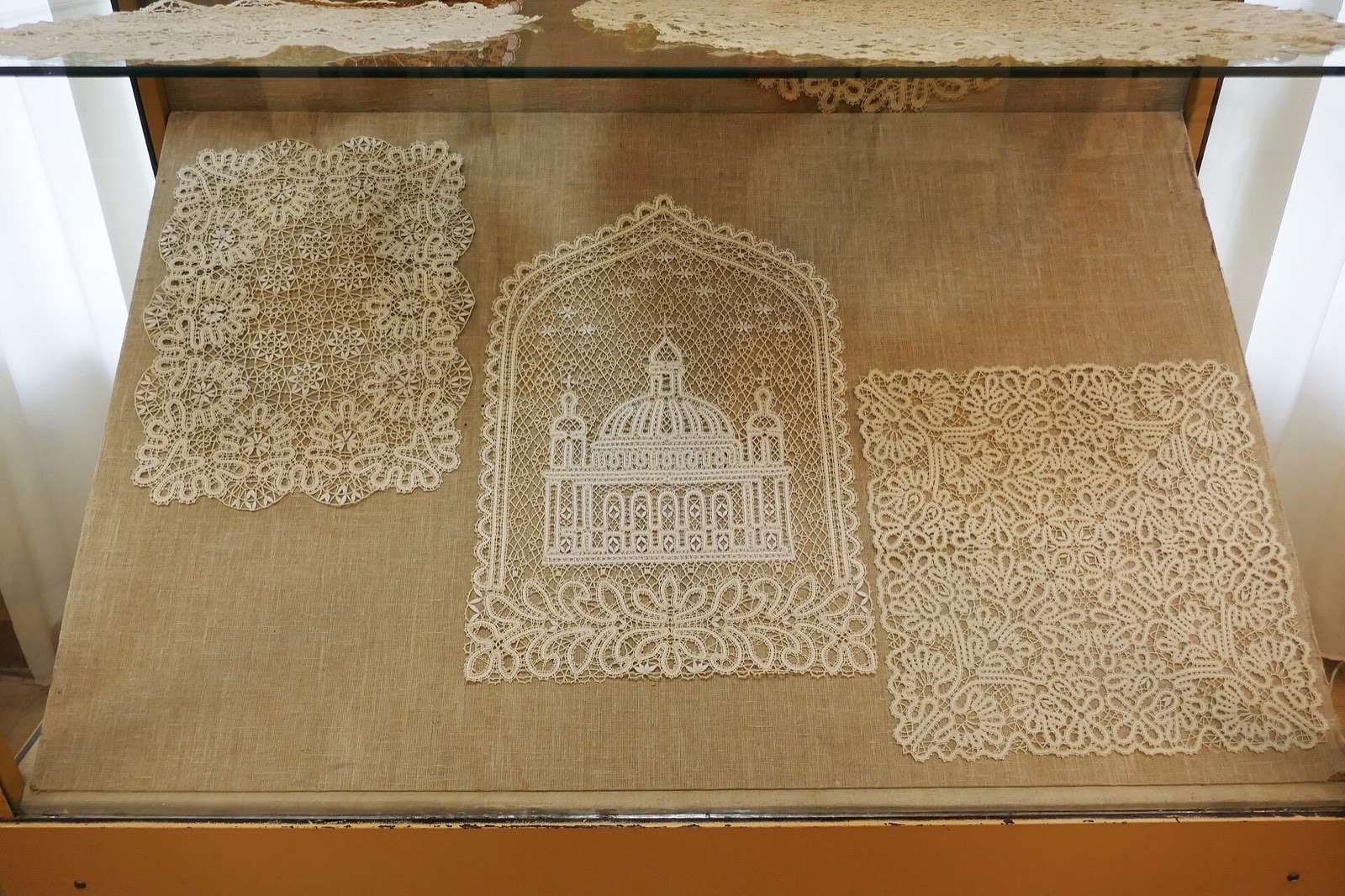
Vologda lace 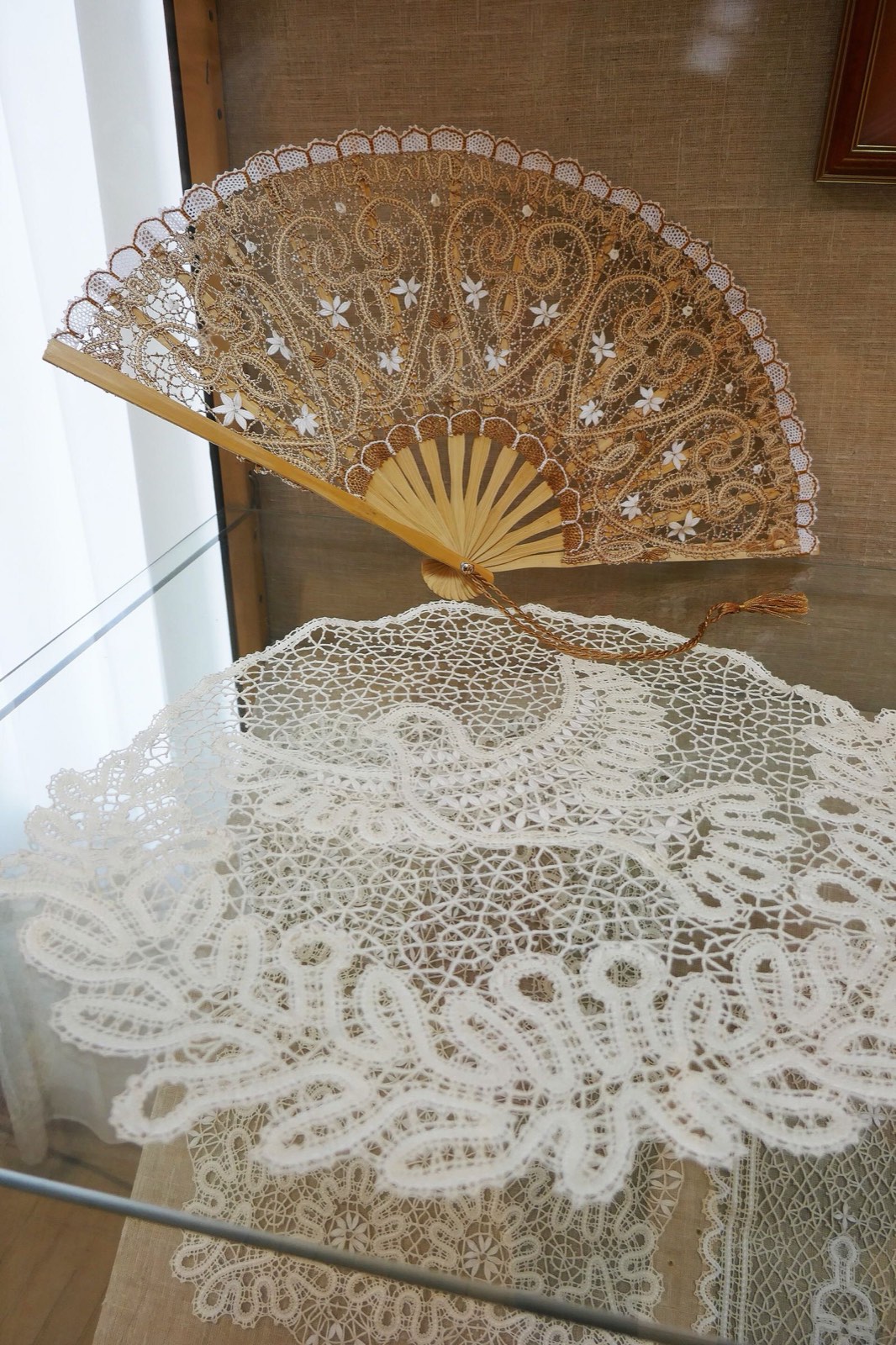
Vologda lace 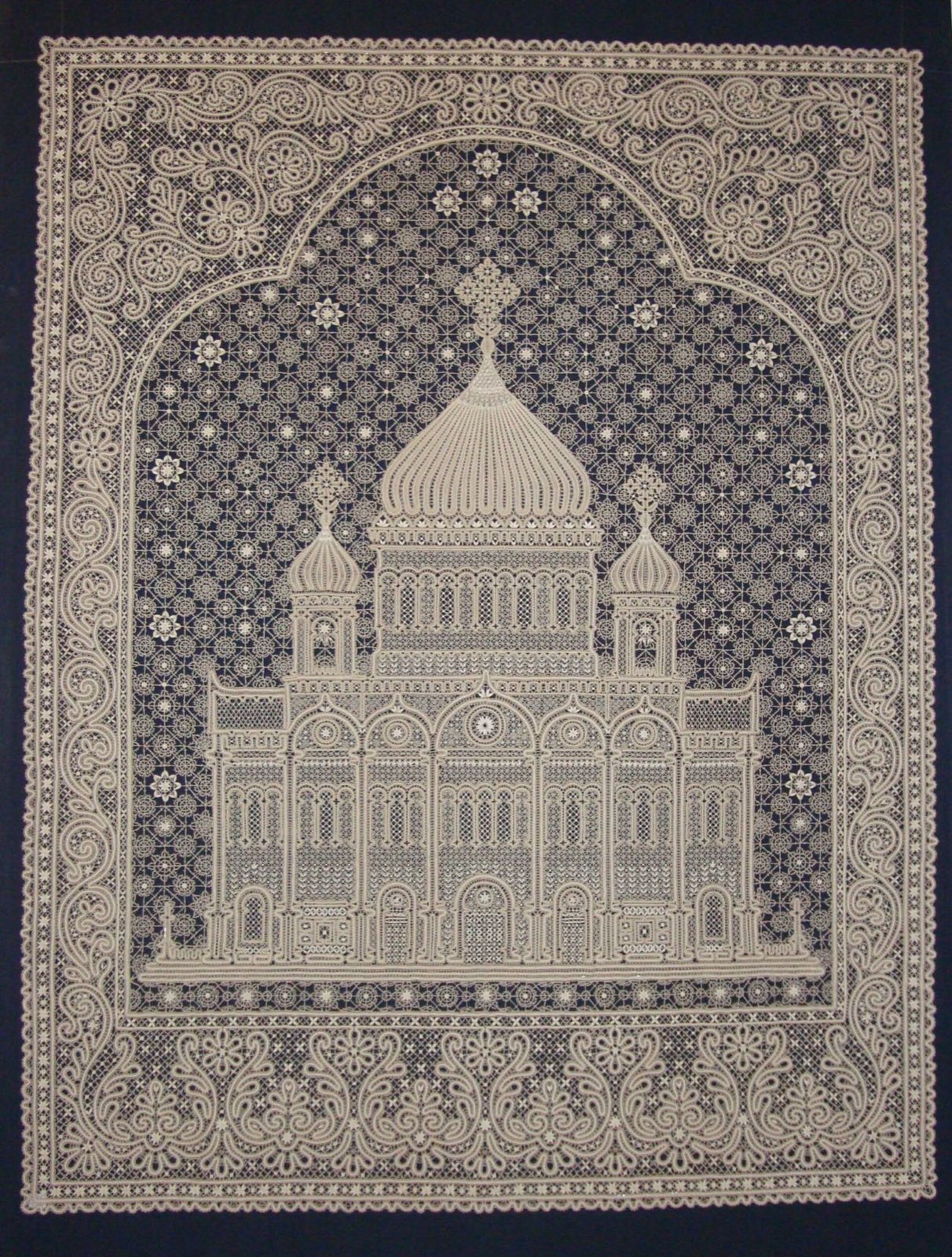
Vologda lace