Kholmogory bone carving
Carving in walrus and mammoth ivory: openwork caskets, combs and chests with plant ornament. The craft took shape in the 17th century in Kholmogory and the surrounding villages on the Northern Dvina, in the Arkhangelsk Region.
The craft arose in the 17th century in the village of Kholmogory on the Northern Dvina. After the capital moved to St Petersburg, Arkhangelsk and the villages around Kholmogory became the centre of folk carving, as walrus tusk and fossil mammoth ivory were plentiful here.
Carvers made combs, chests, caskets, goblets, snuffboxes and chess sets. Caskets were built on a wooden base and veneered with thin bone plates. The makers combined openwork and relief carving with coloured engraving, and set coloured foil or mica beneath the openwork.
The ornament brought together northern Russian plant motifs, patterns of the indigenous peoples of the North and elements of Western European Baroque, which the carvers knew from engravings. Early pieces typically carry an “eye” ornament of small circles with a dot in the centre.
The craft flourished in the 18th century, when many Kholmogory carvers worked in St Petersburg. Today carvers in the Kholmogorsky District carry on the tradition.
Photographs
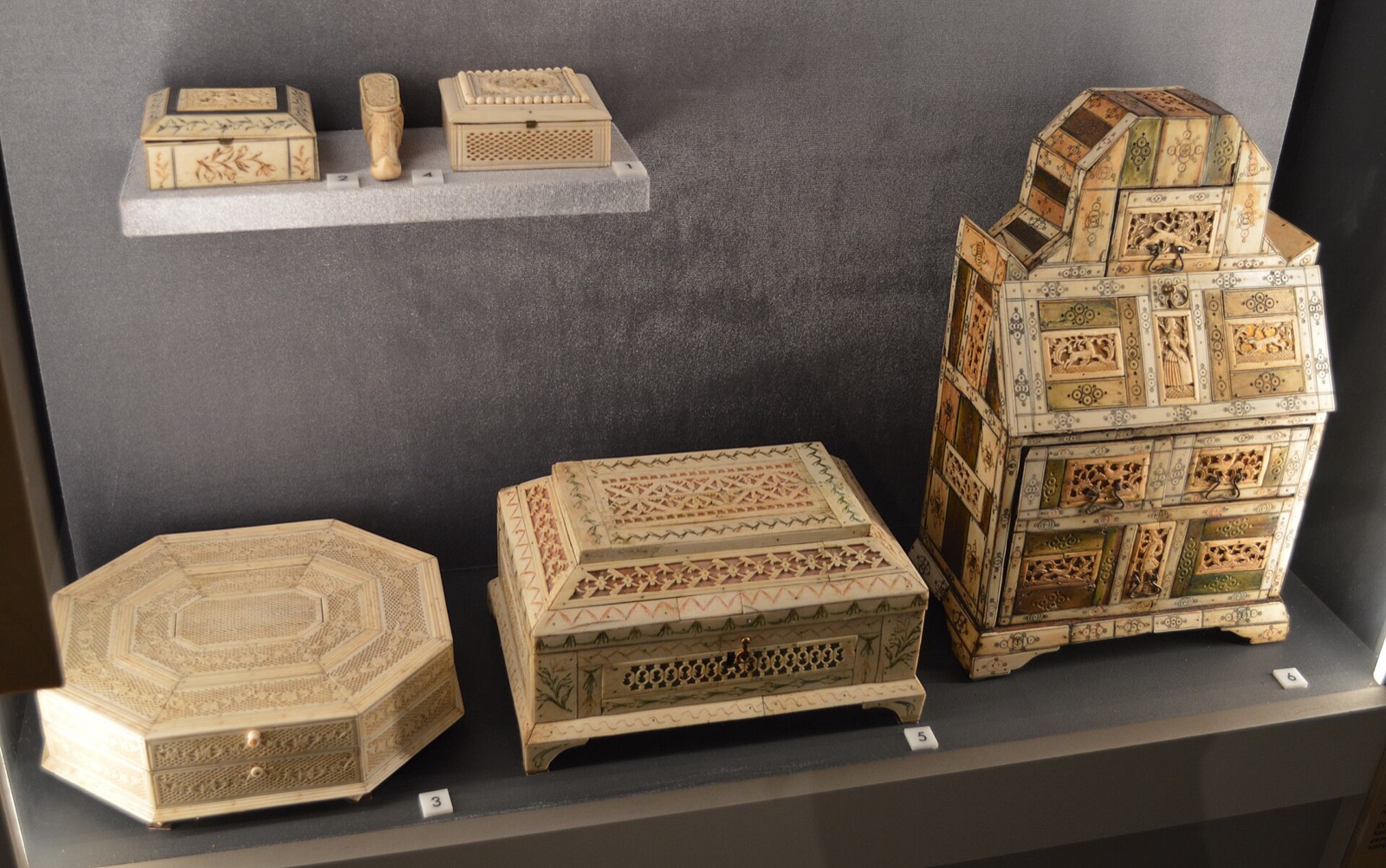
Kholmogory bone carving 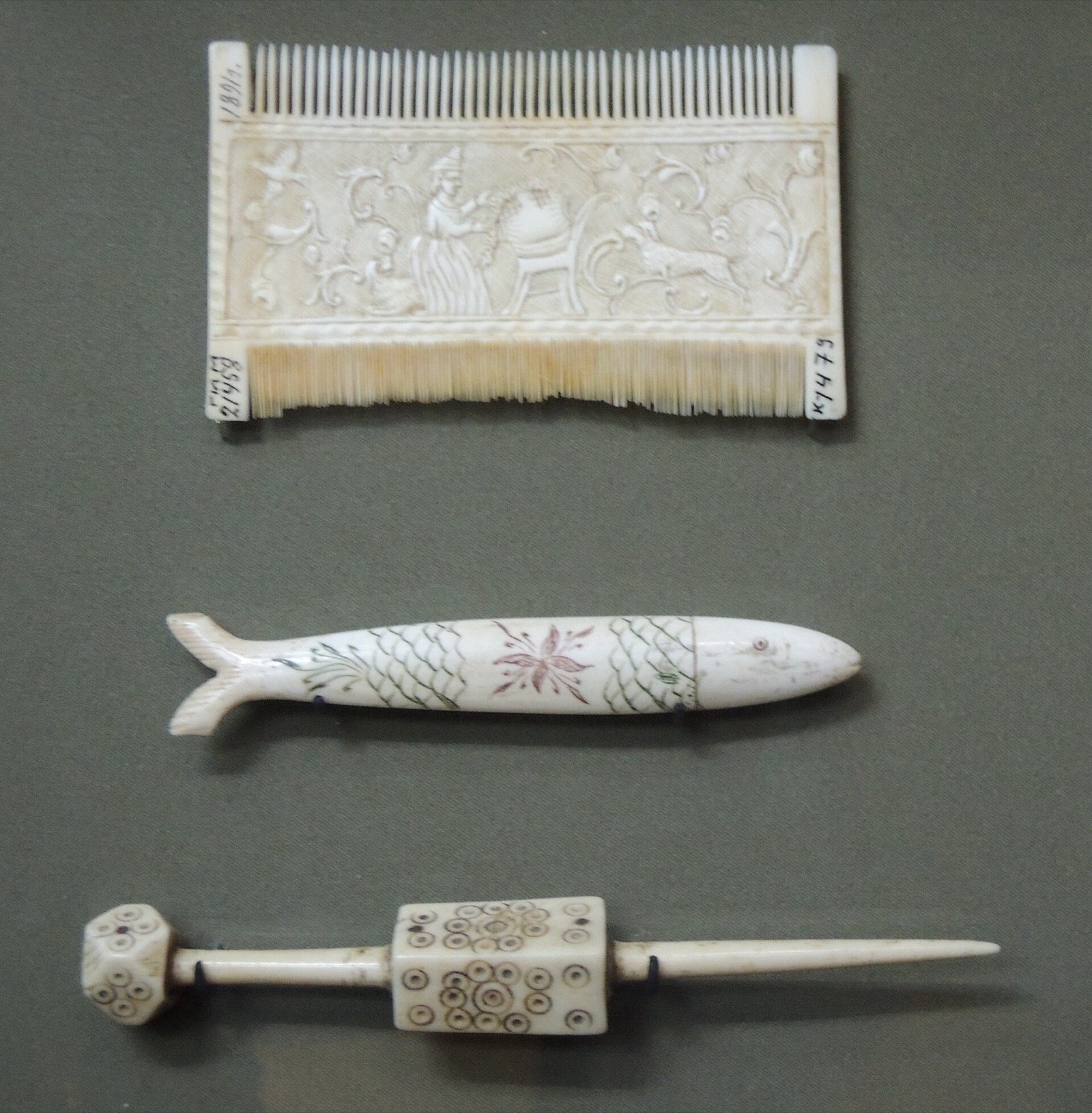
Kholmogory bone carving 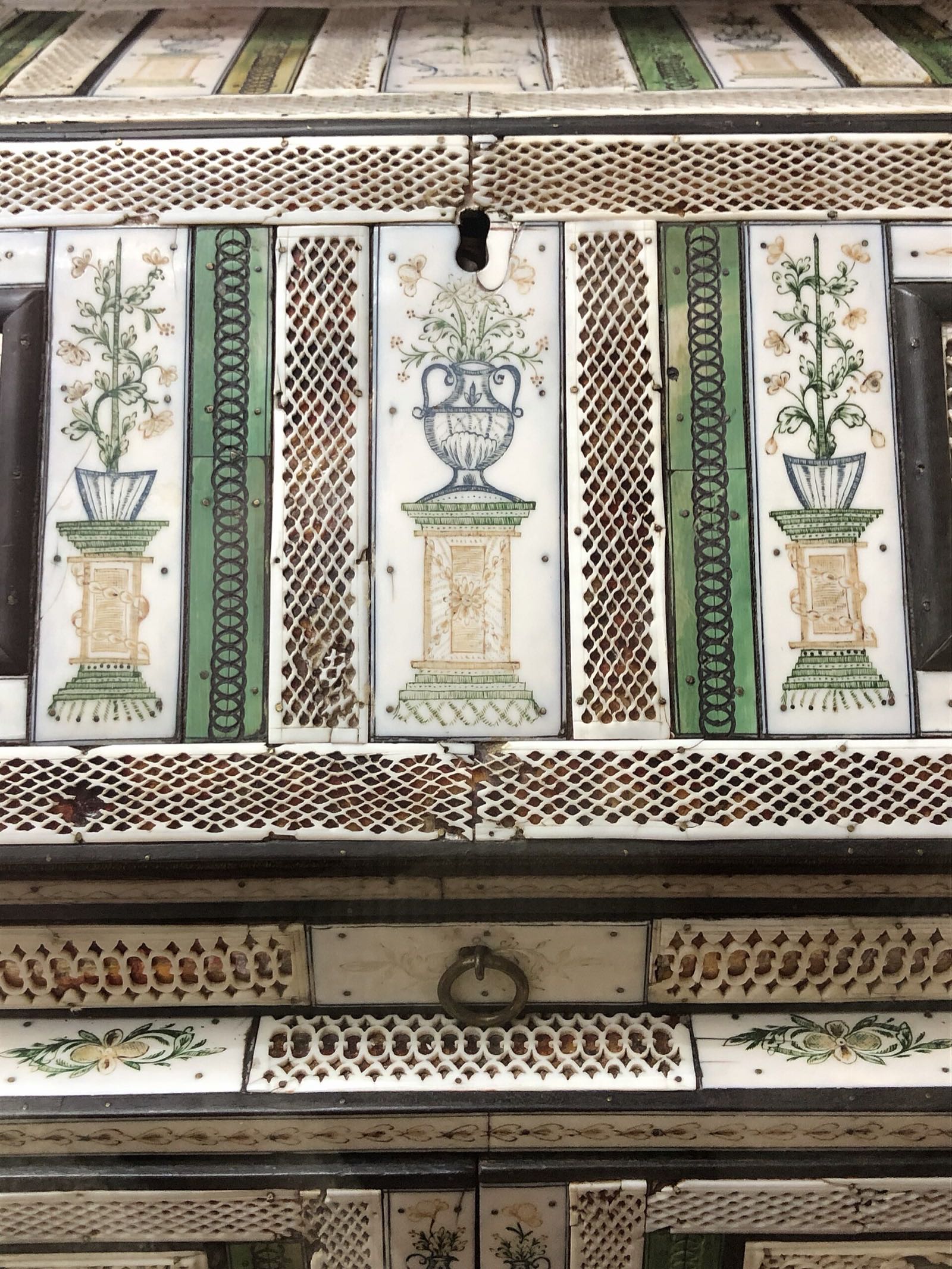
Kholmogory bone carving