Gzhel
Ceramics painted in cobalt on a white ground, one of the most recognisable Russian crafts. Its centre is the Gzhel cluster of 27 villages in the Ramensky urban district of the Moscow Region.
The Gzhel lands have long been known for their clay, which was dug here from the mid-17th century onwards. In 1663 Tsar Alexei Mikhailovich ordered Gzhel clay to be brought to Moscow for apothecary vessels.
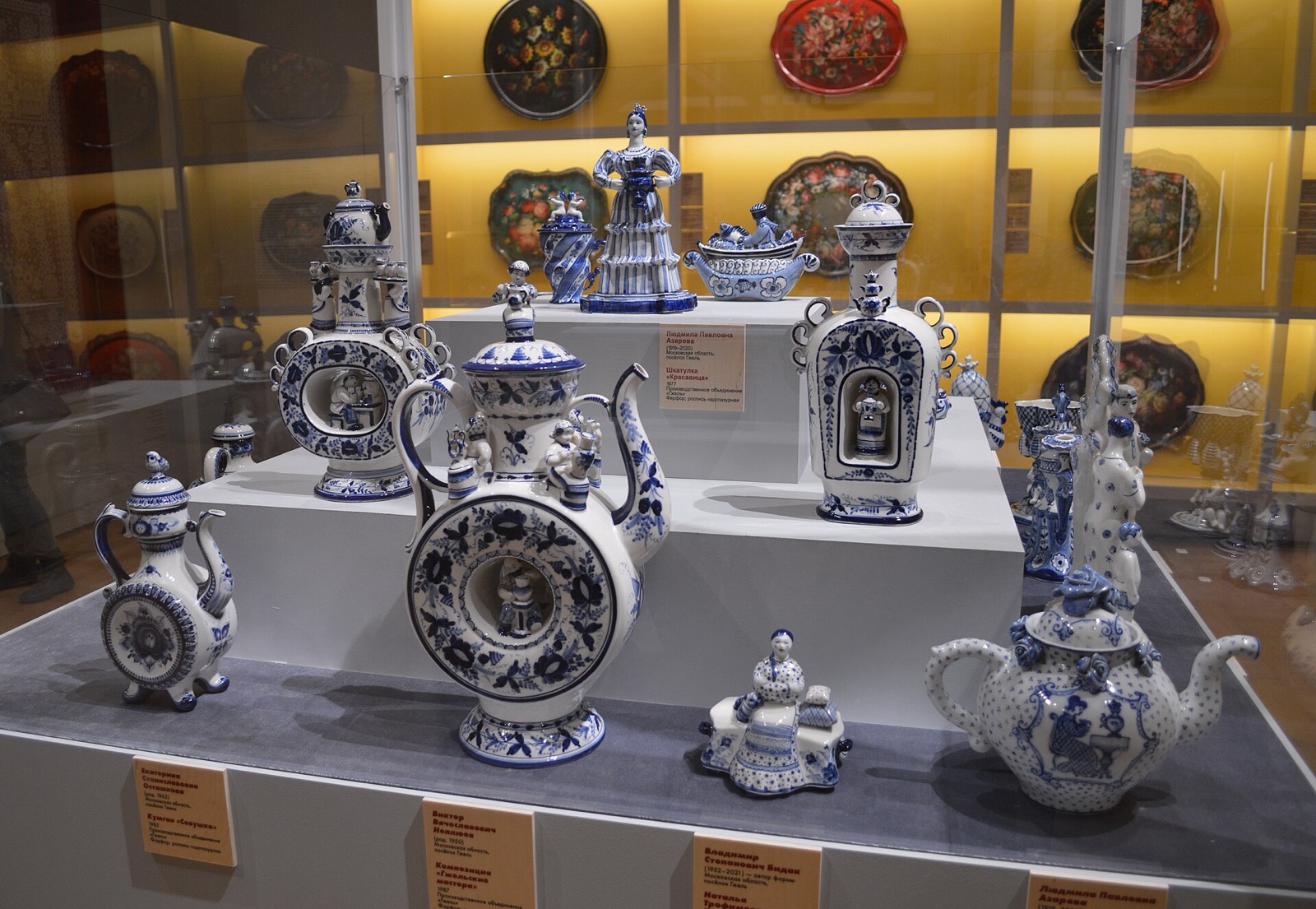
Gzhel took shape as an art craft in the 18th century. The early pieces were majolica with polychrome painting: jugs, kumgan ewers, kvass jugs, plates and small figurines. Later the makers mastered semi-faience, faience and porcelain.
The look familiar today, blue cobalt painting on white, became established in the 20th century. After firing, cobalt gives many shades of blue, and a stroke that fades from deep to light colour lets the painter create a flower, a leaf or a bird in a single movement of the brush.
The Gzhel cluster lies about 60 kilometres from Moscow along the railway towards Murom and Kazan. The craft takes its name from the village of Gzhel on the Gzhelka River.
Photographs
Gzhel 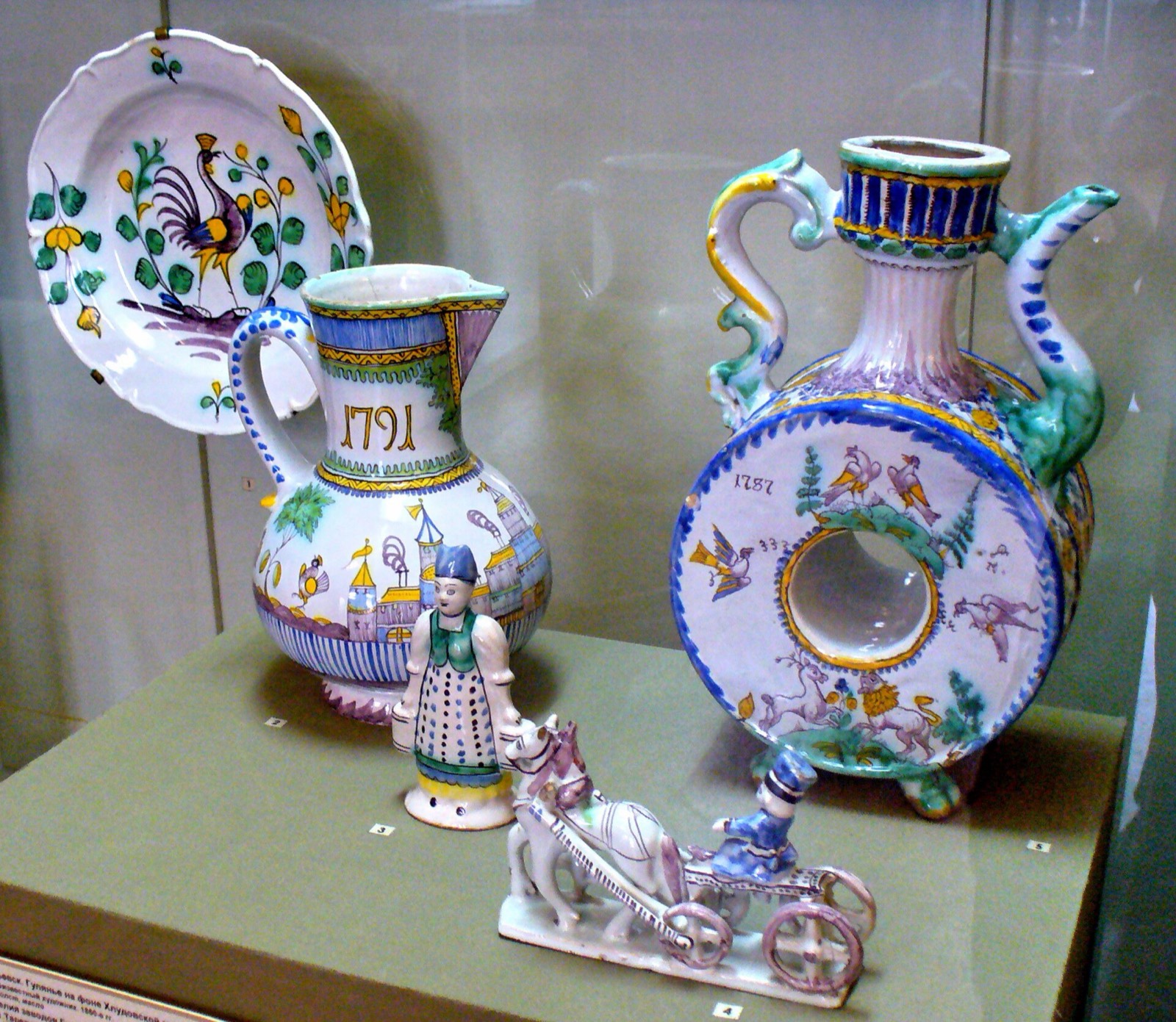
Gzhel 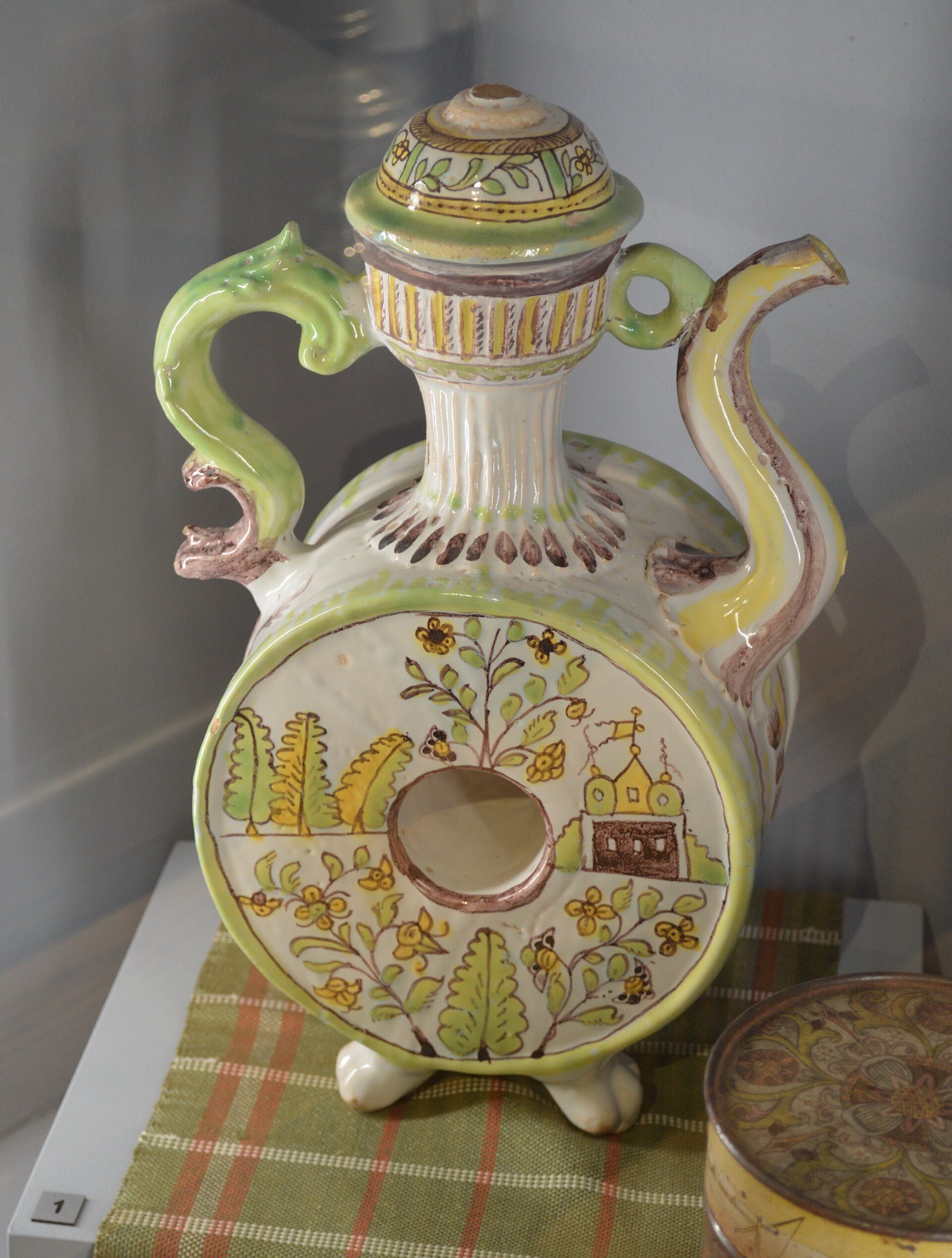
Gzhel